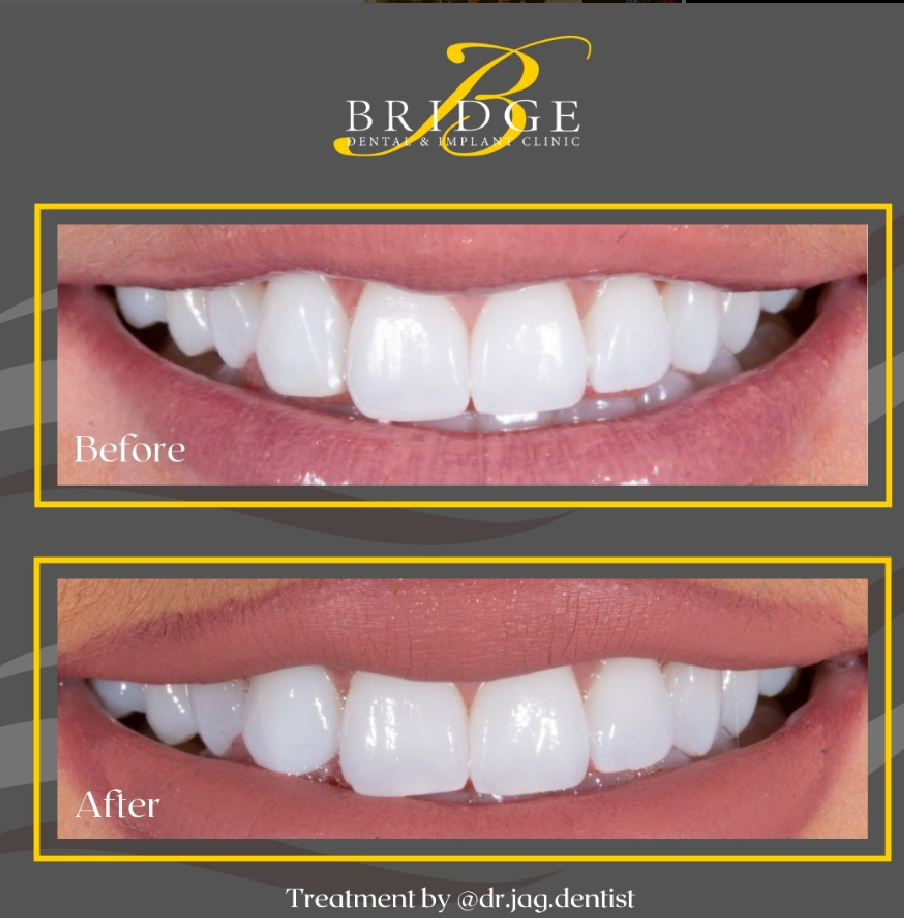
Veneers are handmade porcelain/ceramic shells which are artistically layered and created to mimic the natural form and contour of the teeth. They are typically made by a ceramist who has spent years perfecting their artistic skills.


They offer a long-lasting cosmetic solution, though porcelain veneers are generally more durable and stain-resistant than composite ones. The process involves a dentist preparing the tooth, taking impressions, and then affixing the custom-made veneer to the tooth’s surface.
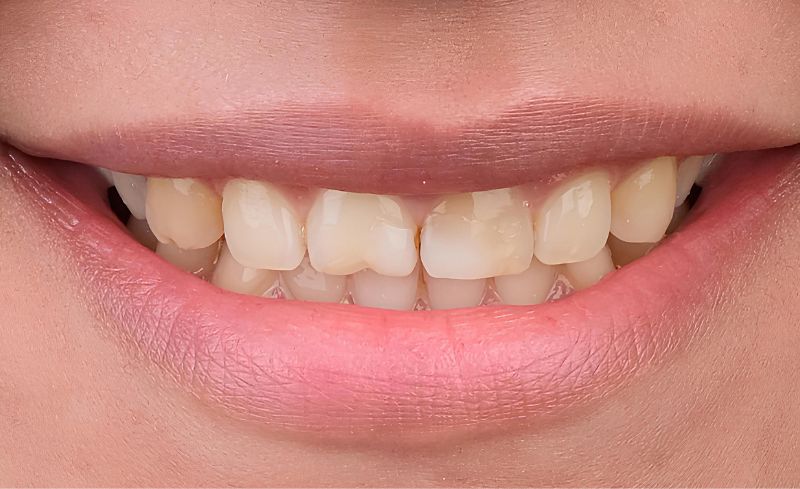 Before
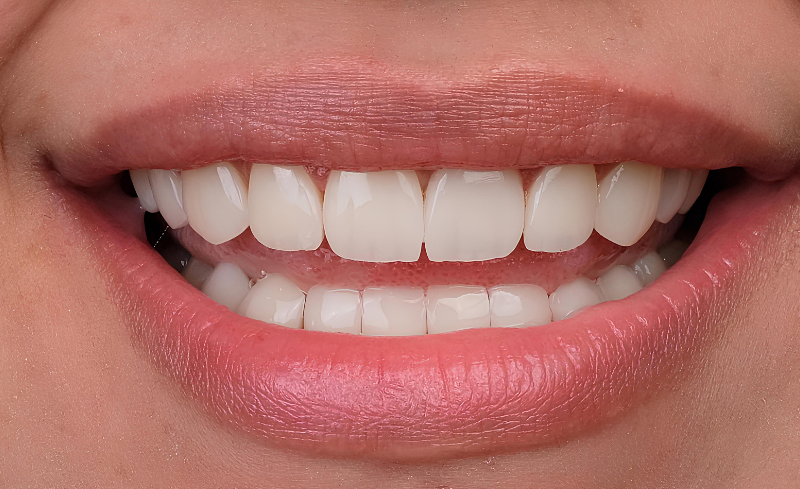 After
After
They provide a brighter, more uniform, and attractive smile.
Porcelain veneers can last for many years with proper care.
Porcelain veneers are less likely to become discoloured than natural teeth.
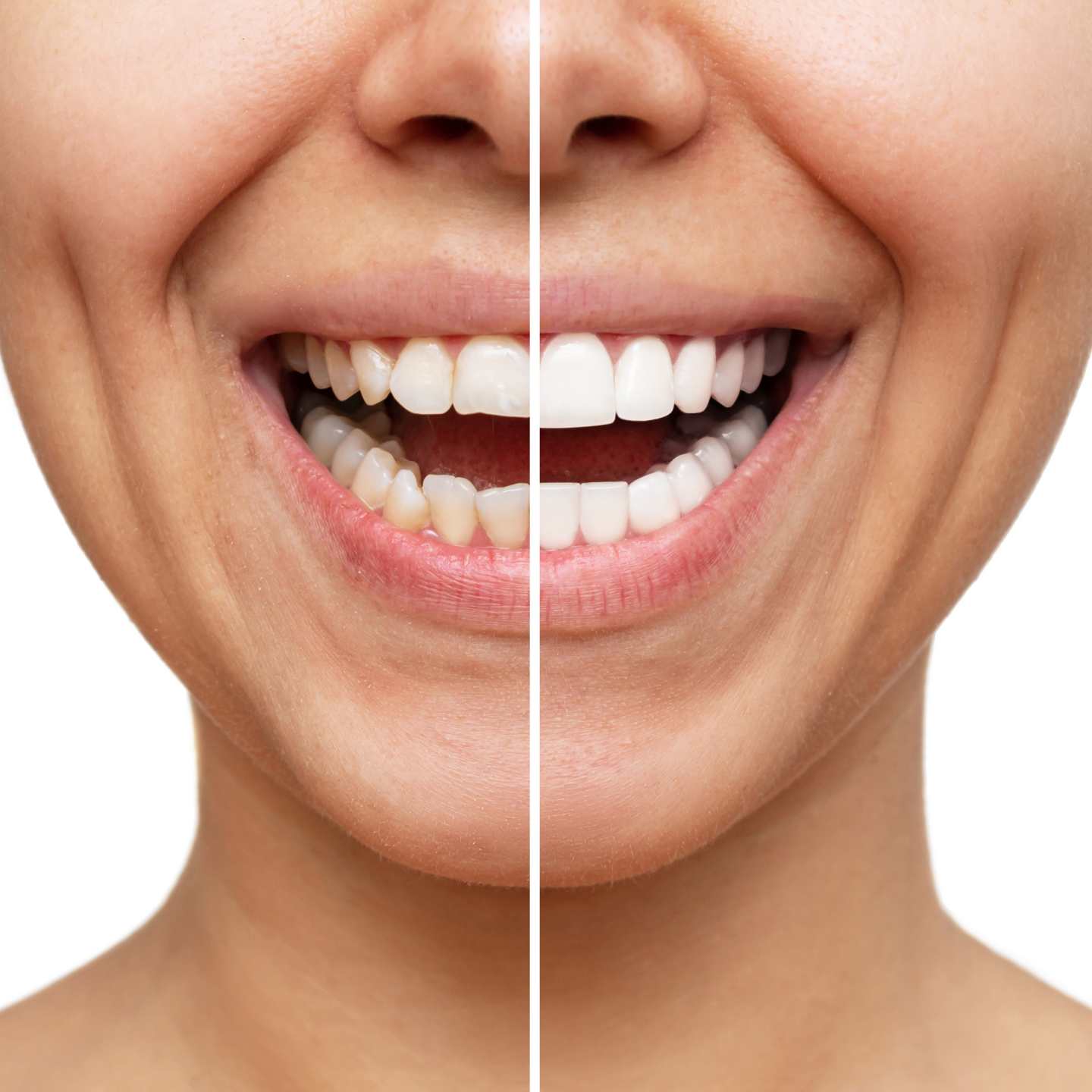
Step 1/2:
Some of the shiny outer enamel surface of the tooth may be removed to ensure the veneer can be bonded permanently and put in place later. The amount of enamel removed is minimal and will be equal to the thickness of the veneer to be fitted, ensuring the tooth remains the same size. A local anaesthetic (injection) may be used to ensure no discomfort, but often this is not necessary. Once the tooth has been prepared, the dentist will take an impression of it.
This will be given to the dental technician, along with any other necessary information to create the veneer. The colour of the surrounding teeth is matched on a shade guide to ensure that the veneer will look entirely natural.




Veneers are handmade porcelain/ceramic shells which are artistically layered and created to mimic the natural form and contour of the teeth. They are typically made by a ceramist who has spent years perfecting their artistic skills.
A dental veneer is a thin layer of porcelain laminate which is fitted over the surface of a tooth and provides a natural appearance and functions as a normal tooth when you bite or chew.
Veneers can be used in a number of ways. They can be used to improve the appearance of imperfections, such as worn tooth enamel, uneven teeth, and discolouration, or even to close gaps between teeth.
On average, veneers last for 10 years or more, depending on how well they are cared for.